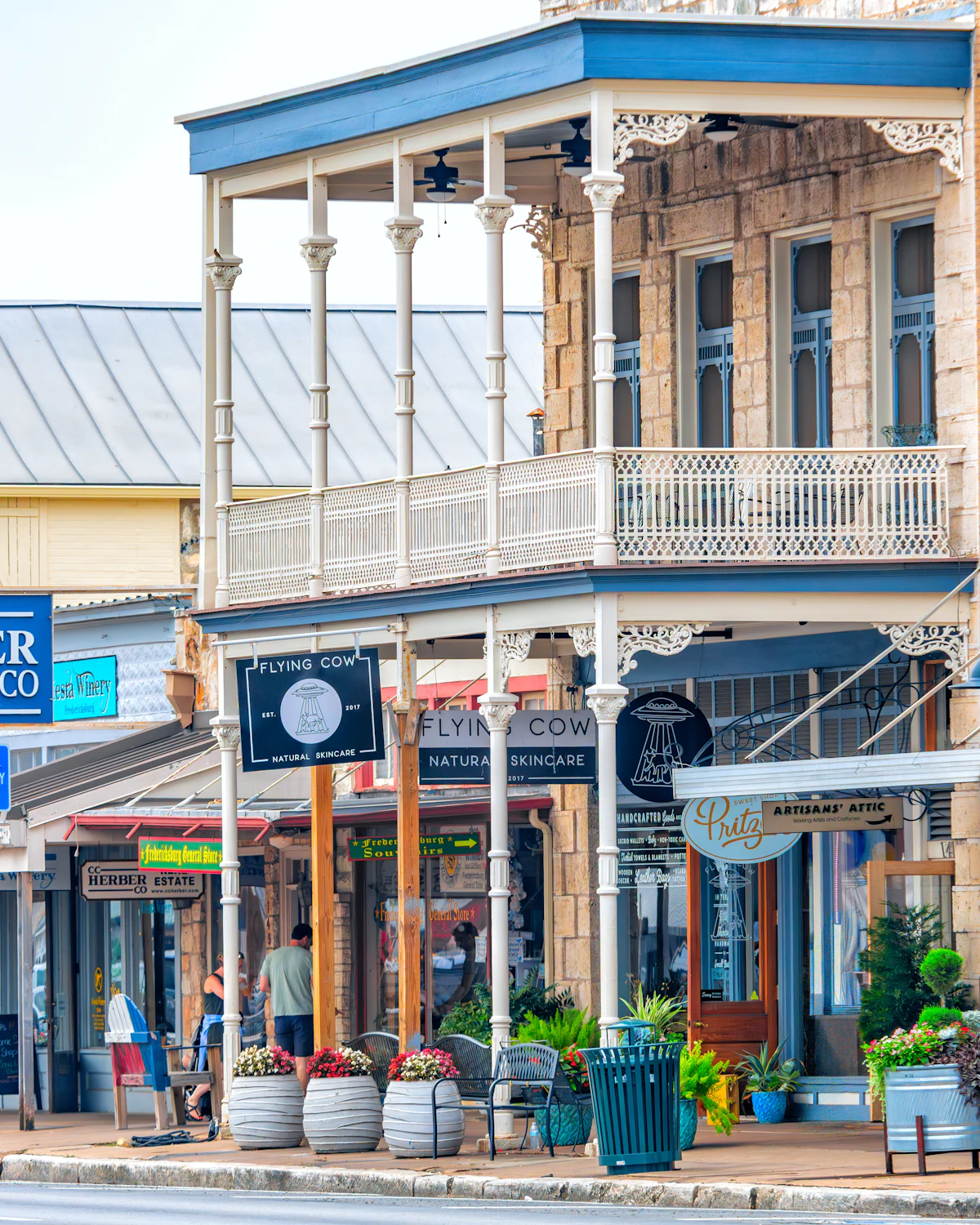
Wall sign size at a glance
| Question | Short answer |
|---|---|
| How is the limit set? | Three ways: a share of the wall (Albuquerque, Atlanta, Austin, Charlotte, Dallas, Fort Worth, Houston, Indianapolis, Jacksonville, Las Vegas, Nashville, San Antonio), square feet per foot of frontage or street wall (Boston, Chicago, Los Angeles, Miami, New York City, Philadelphia, Phoenix, Portland, San Diego, San Francisco), or a district figure or formula (Baltimore, Columbus, Denver, Seattle). |
| What share of the wall? | From 10% (Atlanta, Charlotte, Fort Worth, Jacksonville) to 25% (Dallas primary facade, Houston, San Antonio). Austin and Las Vegas use 10% or 20% depending on the district, Nashville 15%, Indianapolis 20% of the front elevation, and Albuquerque 5% to 25% of the façade depending on the zone district. |
| Is there a hard cap? | Often: 200 sq ft for any one sign in Atlanta, 300 sq ft in Charlotte, 500 sq ft per wall in Fort Worth and Phoenix, 200, 100 or 50 sq ft for any one sign in Portland depending on the zone, 1,000 sq ft per wall in Houston, 350 sq ft at most in San Diego, 300 sq ft in Miami T5 and T6, 150 sq ft for an unlit sign in New York City C1 and C2, and 50 to 150 sq ft in the San Francisco districts shown. |
| Does my zoning district matter? | In most of these cities, yes: the district sets the share, the multiplier or the cap. Check your zoning district on the city page before you size the sign. |
| How big can a ground sign be? | Most of these cities tie it to your street frontage or the type of street: from 36 sq ft in Charlotte’s smaller districts and 60 sq ft for one business on a Houston local street, up to 375 sq ft on a San Antonio expressway and 480 sq ft in Nashville’s §17.32.130 districts. See ground signs by city. |
| How do I measure my sign? | Each code says how sign area is counted, usually a box around the letters or the cabinet. See how to measure sign area. |
What each city allows
Each line is taken from the city page, which links the code text. The city name opens the sizing section or calculator on that page.
| City | Wall sign limit | How it is set |
|---|---|---|
| Albuquerque | All wall signs on a façade together: 5% of the façade area in MX-T and MX-FB-ID, 10% in MX-L, 15% in MX-M, MX-H, MX-FB-FX, MX-FB-AC, MX-FB-UD and NR-C, and 25% in NR-LM and NR-GM, doors and windows included (IDO Table 5-12-3). | Share of the wall |
| Atlanta | In C-1, C-2, C-3, I-1 and I-2: ten percent of your front wall, no individual sign over 200 sq ft, and at least 60 sq ft for every business establishment; in C-4 and C-5 the ten percent is measured against the ground-floor front wall. | Share of the wall |
| Austin | 20% of the facade in the commercial, expressway corridor and downtown districts and 10% in neighborhood commercial and scenic roadway, with facade height counted only up to 15 feet. | Share of the wall |
| Baltimore | Ground-floor wall sign per tenant with a street-level door: 24 sq ft in C-1 and C-1-VC, 30 sq ft in C-2, 40 sq ft in C-3 and C-4; above the ground floor, 1.5 to 2 sq ft per linear foot of building frontage (Table 17-201). | District figure or formula |
| Boston | Each sign, and all wall signs together, up to 3.5 sq ft per foot of Sign Frontage; sign height 4.5 ft. | Per foot of frontage |
| Charlotte | Wall, projecting, awning and canopy signs together: 10% of the tenant’s leasable building wall square footage or 300 square feet, whichever is less, in every district. | Share of the wall |
| Chicago | All signs together, set by zoning district and street frontage: a B1 lot gets 3 × street frontage or 600, whichever is less, and a C2 lot 5 × street frontage or 1,800, whichever is less (§17-12-1003-E). | Per foot of frontage |
| Columbus | The mass factor from the Tables of Elements multiplied by the square root of the area of the fronting elevation of the building (§3377.04 B). | District figure or formula |
| Dallas | 25 percent of the primary facade, and 15 percent of each secondary facade (§51A-7.305(c)). | Share of the wall |
| Denver | Set by district group: 20 sq ft, 50 sq ft or 80 sq ft flat, or a frontage formula, with a total cap of 192 sq ft or 600 sq ft per use in the districts the calculator covers. | District figure or formula |
| Fort Worth | 10% of the facade they are mounted on, with height counted up to 15 ft, up to 500 sq ft per wall; sign length is capped at 75% of the wall width. | Share of the wall |
| Houston | All wall signs on one wall together: 25% of that wall or 1000 sq ft, whichever is smaller. | Share of the wall |
| Indianapolis | All primary building signs combined may cover up to 20% of the front elevation, 15% of a side and 10% of the rear (Table 744-906-3). | Share of the wall |
| Jacksonville | 10% of the wall your business occupies. | Share of the wall |
| Las Vegas | In the City, wall signs may total 20 percent of the building elevation (10 percent in P-O, O, C-D and C-PB). | Share of the wall |
| Los Angeles | On a single-story building, wall signs facing a street can total 2 sq ft per foot of street frontage plus 1 sq ft per foot of building frontage (LAMC §14.4.10). | Per foot of frontage |
| Miami | All signs together, set by your Transect Zone: a commercial T5 or T6 storefront scales with frontage up to 300 sq ft, T4 up to 150 sq ft, and residential-tier zones are capped tight. | Per foot of frontage |
| Nashville | 15% of the facade they sit on, capped at 192 or 288 sq ft outside the §17.32.130 districts; building signs may not extend above the roof line. | Share of the wall |
| New York City | Set by your zoning district, and whether the sign is lit: in C1 and C2 a non-illuminated sign may be three times the street frontage up to 150 sq ft, but only up to 50 sq ft when illuminated. | Per foot of frontage |
| Philadelphia | Wall, projecting and marquee signs share one allowance per frontage at 1 to 15 square feet per foot of building frontage, depending on your zoning district (Table 14-904-1). | Per foot of frontage |
| Phoenix | 1 square foot per foot of building frontage, figured separately for each elevation, minimum 50 and maximum 500 (§705.D.1, Table D-1). | Per foot of frontage |
| Portland | 1½ sq ft per foot of primary building wall, or 1 sq ft per foot if a freestanding sign is on the same street frontage; no single sign over 200 sq ft in CE, CM3, EG, EX, IG and IH, 100 sq ft in CI2, CM2 and CX, or 50 sq ft in CM1 and RX (§32.32.020, Table 2). | Per foot of frontage |
| San Antonio | 25% of a building facade or a flat 50, 75 or 100 sq ft per occupancy, whichever is greater (§28-47). | Share of the wall |
| San Diego | Your street wall length times a factor set by the width of the public right-of-way in front of you, capped at 350 sq ft in Category A only where the premises has wall signs and no roof or projecting signs (otherwise 200 sq ft), 200 sq ft in Category B and 100 sq ft in Category C (all CN zones, and the Coastal Overlay Zone). | Per foot of frontage |
| San Francisco | Whichever is less of a per-foot multiplier or a hard cap: NC-1 is 1 sq ft per foot of frontage up to 50 sq ft, NC-2 is 2 sq ft per foot up to 100 sq ft, NC-3 and busy corridors 3 sq ft per foot up to 150 sq ft. | Per foot of frontage |
| Seattle | NC1 and NC2 cap all signs at 185 sq ft per business; C1 and C2 have no total cap but limit each wall sign to 672 sq ft. | District figure or formula |
Ground and freestanding signs
Thirteen of these cities state a size or height for a ground, monument or pole sign on the city page. Most size it from your street frontage or the street in front of you.
| City | Ground sign limit |
|---|---|
| Albuquerque | One per premises per street frontage, only with at least 100 ft of frontage: 50 sq ft and 9 ft tall in MX-T and MX-FB-ID, 100 sq ft and 18 ft in MX-L, and in the other mixed-use districts, NR-C, NR-LM and NR-GM 26 ft tall and 100, 200 or 300 sq ft depending on whether it faces a local street, an arterial or an interstate (Table 5-12-3). |
| Austin | One per lot, sized from street frontage: in the commercial district the lesser of 0.7 sq ft per foot or 200 sq ft. |
| Baltimore | Monument sign, 1 per lot, 6 ft tall at most and 32 sq ft in C-1, C-1-VC and C-2, 50 sq ft in C-3 and C-4, on a lot with at least 50 ft of frontage; pole signs from C-2 up, 16 to 32 sq ft (Table 17-201, §17-408). |
| Charlotte | 36 square feet in N1, N2, NC, CAC, TOD-CC, TOD-TR, Campus and IMU districts; 84 square feet in CG, CR, ML-1 and ML-2; prohibited in RAC, UE, UC, TOD-UC and TOD-NC. |
| Chicago | Up to 50% of the lot’s maximum total sign area. |
| Columbus | Capped at 300 sq ft within the first 100 feet of setback, and set back no less than 15 feet from any street right-of-way line. |
| Houston | It depends on the street category and how many businesses share the site: from 8 ft tall and 60 sq ft for a single business on a local street up to 42½ ft tall on a freeway or highway (Table 4611). |
| Indianapolis | Height only: monument 10 ft, pylon 25 ft, pole 20 ft in Commercial and Industrial districts; poles are not permitted in Mixed-Use. |
| Jacksonville | 1 square foot for each linear foot of street frontage, capped by your zoning district. |
| Nashville | From your district group's lot-frontage table: from 32 sq ft and 20 ft on a lot under 50 ft wide in the §17.32.110 districts up to 480 sq ft and 40 ft in the §17.32.130 districts. |
| Portland | 1 sq ft per foot of arterial street frontage, up to 200 sq ft and 25 ft tall in CE, CM3, EG, EX, IG and IH, 100 sq ft and 20 ft in CI2, CM2 and CX, and 50 sq ft and 15 ft in CM1 and RX (Table 2). |
| San Antonio | For one tenant, from 16 ft and 75 sf on a local street to 50 ft and 375 sf on an expressway (Table 1). |
| San Diego | Maximum 200 sq ft at the top of the Category A grid, 150 sq ft in Category B, 100 sq ft in Category C. |
Cities not listed
Sacramento sets sign area by zoning district in Chapter 15.148, Article III, but the code text we can cite does not state the figure for each district, so we give no number.
Each answer is taken from the city page, which links the code text it was read from.
Want to know what your city will ask for? Send your sign details and we will tell you →
Ask us how the code reads for your sign
Send your sign's dimensions and the city you are in, and we will reply with what that city's code allows for that sign. No charge. We are not a sign contractor and not a permit agent.